The Most Important Movement You've Never Heard Of
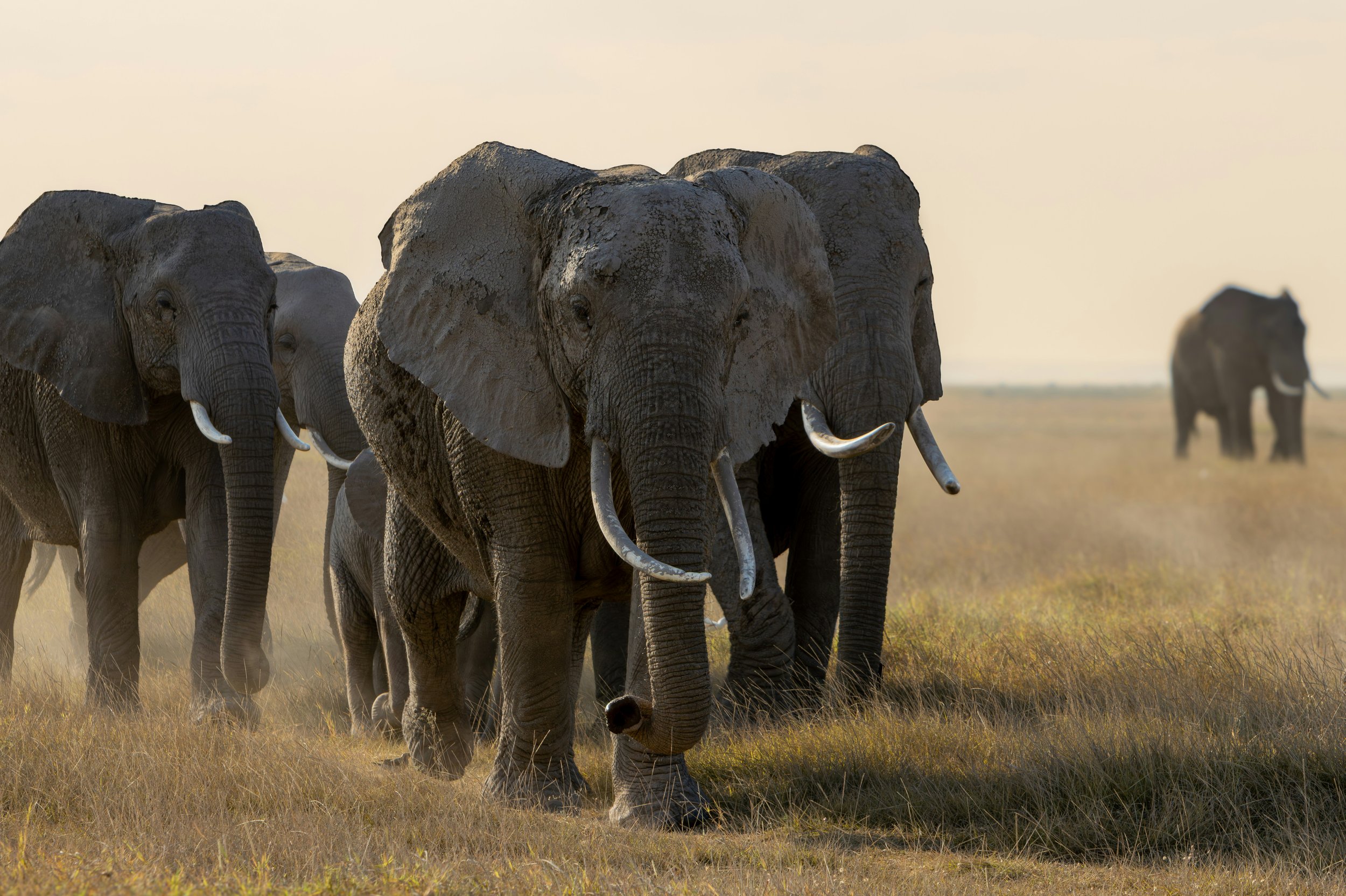
Image credit: Anibal Paradisi via Unsplash
The work of linking inner change to outer change is older, deeper, and far bigger than perhaps most of us realise.
The suffering in the world kept me awake at night, even as a child. And most of my career I was bumping up against the same wall: wanting to make the world around me different, and constantly feeling that my own limitations were getting in the way. The limits of my physical health. My emotional limits. And the simple limit of being just one human being, and well… not God.
I can see now that thinking of myself as so limited created its own suffering, and kept the spiral turning. Until, slowly, bit by bit, it got interrupted. By mentors, by teachings, by trainings, and by something I'd stopped trusting: my own wisdom. I began to change how I saw myself, and how I treated myself - better vibes all round. The point was to start stabilising my ego and stop running on "not-good-enoughness", a murky fuel that essentially makes nothing better.
I don't have to convince you how common that fuel is. Whether you do this work for others, or you're considering it for yourself — you'll recognise it.
There's a contradiction at the heart of changemaking. We pour ourselves into making the world more just, more sustainable, more caring. And yet the way we treat ourselves, and often the way our organisations treat their people, tells a different story. We overwork. We over-give. We carry too much, expect too much, set too few boundaries, and treat our own burnout as a personal failing rather than a signal that something in the system needs care.
Inside NGOs, charities, international institutions, and grassroots movements, there is growing recognition that inner work — coaching, reflection, emotional and psychological support — is important. People say it openly now. What's missing is the budget. The investment. The sense that this is essential rather than indulgent. We'll often fund the repair once someone fully crumbles — but rarely the conditions that would have kept them well.
Meanwhile, burnout keeps climbing. And besides being a wellbeing tragedy, it's a loss of exactly the people, energy, and wisdom the world most needs right now.
If Confucius said it…
Linking personal wellbeing to social wellbeing is not a fringe idea, and it's certainly not a new one.
"To put the world in order, we must first put the nation in order; to put the nation in order, we must put the family in order; to put the family in order, we must cultivate our personal life; and to cultivate our personal life, we must first set our hearts right." Confucius, 5th century BCE
"Yesterday I was clever, so I wanted to change the world. Today I am wise, so I am changing myself." Rumi, 13th century
"Caring for myself is not self-indulgence, it is self-preservation, and that is an act of political warfare." Audre Lorde, 1988
Two and a half thousand years apart, and pointing in the same direction.
What does this movement actually look like?
So the movement to bring inner work to outer change into our professional lives is far bigger than we might be consciously aware of on a given day. I suspect that I'm not necessarily blowing you away with new information. The point of sharing it, and framing it this way, is to remind you — to hold it up to the light so you see the bigger picture.
Because if you're like me, you may sometimes experience those working for inner growth as scattered. Each institute, each practitioner, each framework has its own language, its own approach — including my own initiative. From the inside, it can feel lonely.
If you're a coach, a guide, a facilitator working outside a large institution, you know how hard it can be to make ends meet, and how isolating it can feel. If you're inside an organisation trying to secure funding for this work, you know that struggle too.
It can feel like you're operating in the margins. You might even doubt your choice to invest in this — as a career in offering it, or as a professional choice to pay for it.
But step back, and a different picture emerges. Across the world, many hundreds of organisations, initiatives, and countless individuals are working from the same essential insight: that personal and social transformation are not two separate things. They are the same thing, working at different scales, and sustaining each other.
Scratching the surface, but here's just some dots to start creating that painting in your mind’s eye:
(Skip these mentions if you want to to scroll straight down tot the conclusion)
Starting in Europe (which I know best because I live there): the Inner Development Goals now draw thousands of people across the world. The Climate Coaching Alliance psychologists and leadership professionals across the world, bringing the ecological emergency into coaching. The Wellbeing Project promotes the idea that the wellbeing of changemakers fuels the wellbeing of the world, partnering with Ashoka, Skoll and Schwab. The Pocket Project works with individual, ancestral and collective trauma as part of a global restoration movement. There's also the wide-reaching Presencing Institute, home to Otto Scharmer's Theory U; the Climate Psychology Alliance, and the Alef Trust, offering transpersonal psychology and consciousness studies in service of inner and outer flourishing.
In Africa, the African Coaching Network brings together coaches who are themselves activists and movement-builders, embedded within movements across the continent. Global Grassroots equips emerging women leaders with contemplative tools to design their own conscious change solutions. And the wisdom of Ubuntu; I am because we are, asserting that a person's humanity is tied intrinsically to the well-being of others.
In Asia, the Mindfulness India Summit and a wider ecosystem draw on contemplative traditions native to the continent, bringing mindfulness, emotional intelligence and ancient wisdom to leadership and social change.
In North America, the Strozzi Institute has spent decades explicitly linking somatic healing to social and environmental justice movements, and the Mindfulness and Social Change Network connects a global community exploring how mindful awareness can contribute to more just and sustainable societies. In Canada, Hollyhock describes its purpose as "inner work for outer impact."
In Australia, The Regenerative Leader runs leadership programmes for non-profit CEOs built on a theory of change they call "Inner Work for Outer Action."
In Latin America, we find a rich landscape of regenerative and community-healing work, much of it rooted in indigenous and traditional practice — from the regenerative-activism networks mapped by Regeneration International to long traditions where spiritual and activist roles have always been intertwined.
And there are bodies of work reaching into every corner of the world, like Joanna Macy's legacy the Work That Reconnects, Deep Democracy to resolve deep social conflict, and the wider Regenerative Culture networks.
Then we have the countless trauma-informed methodologies, the somatic practitioners, the personal leadership coaches, the counsellors and guides — many running one-person businesses — whose shared mission is to help people reconnect with themselves so they can contribute to the world more sustainably, more wisely, more effectively.
And on, and on, and more.
It's an ecosystem. A movement. With passion, and ancient roots.
Doing the maths (but I gave up)
It's impossible to put a precise number on the people who have chosen this as a profession, and those investing in it to support their own growth, because the proof isn't in a headcount: it's in the circles and waves around it.
Let's picture a single institute. Twenty people work there. It runs ten trainings a year, each touching hundreds. Those hundreds go back out into the world and directly touch the lives of thousands, and indirectly, many more.
Every individual coach and practitioner adds to that. Every word you say, every experience you create, every bias you soften and every bit of self-trust you rebuild travels outward and meets what others are sending out too.
Multiply that across the knowledge that every country holds both national and local initiatives like these, and I honestly can't fathom how many people are right now offering, experiencing, and receiving work that is making them more resilient, more compassionate, wiser, and steadier in themselves — so that they can work for change at the same time.
I can't fathom it. But I'd venture to guess we're talking about millions.
Tipping points and hope
I don't know about you, but that gives me hope. It might feel like a slow burn, while the world is burning — in some places already in ashes, literally. And personal change does take time, some bitter pills, and patience.
But we don't have to wait until we're healed. We heal, we change, we heal some more, we change some more. It's a way of life, not a strategy with a goal and a fixed, linear timeline.
Ever heard of the so-called "3.5% rule"? It's a concept in social science that you don't need everyone to change for change to happen. The researcher Erica Chenoweth, studying over a century of movements, found that no nonviolent movement mobilising around 3.5% of a population had ever failed to achieve its aims. Separately, the social scientist Damon Centola, in experiments published in Science, found that once a committed minority reaches roughly 25% of a group, social norms can tip, and the majority follows.
So this is less an argument than an invitation. The boat is already moving, and there's plenty of room.
As a coach writing this from my couch, aware of my utterly privileged life, my heart hurting as I read the headlines, I want to end with this.
If you're on the fence about investing in inner growth, healing, transformation — whatever you call it — I'll nudge you, lovingly, to reassess your priorities, whether it's for yourself, your team, or your organisation. Be part of the movement carrying us from collective exhaustion, across the tipping point, to regeneration.
And if you're one of the practitioners — like me, a coach, a guide, a facilitator — sometimes wondering whether it matters, or whether you can keep going: feel the size of what you're part of.
We are more than we think. We always were.
On inner work & the elephant herd (image used)
An elephant herd is led by its oldest female, who carries decades of memory: where the water is in a drought, which routes are safe, what the herd has survived before. Elephants also move slowly. Often in silence, but magnificently strong. They don't sprint, and they don't leave anyone behind. They travel together, at a steady, deliberate pace, which is exactly how this work happens.