Why The Leadership Boom Isn't Just a Fad
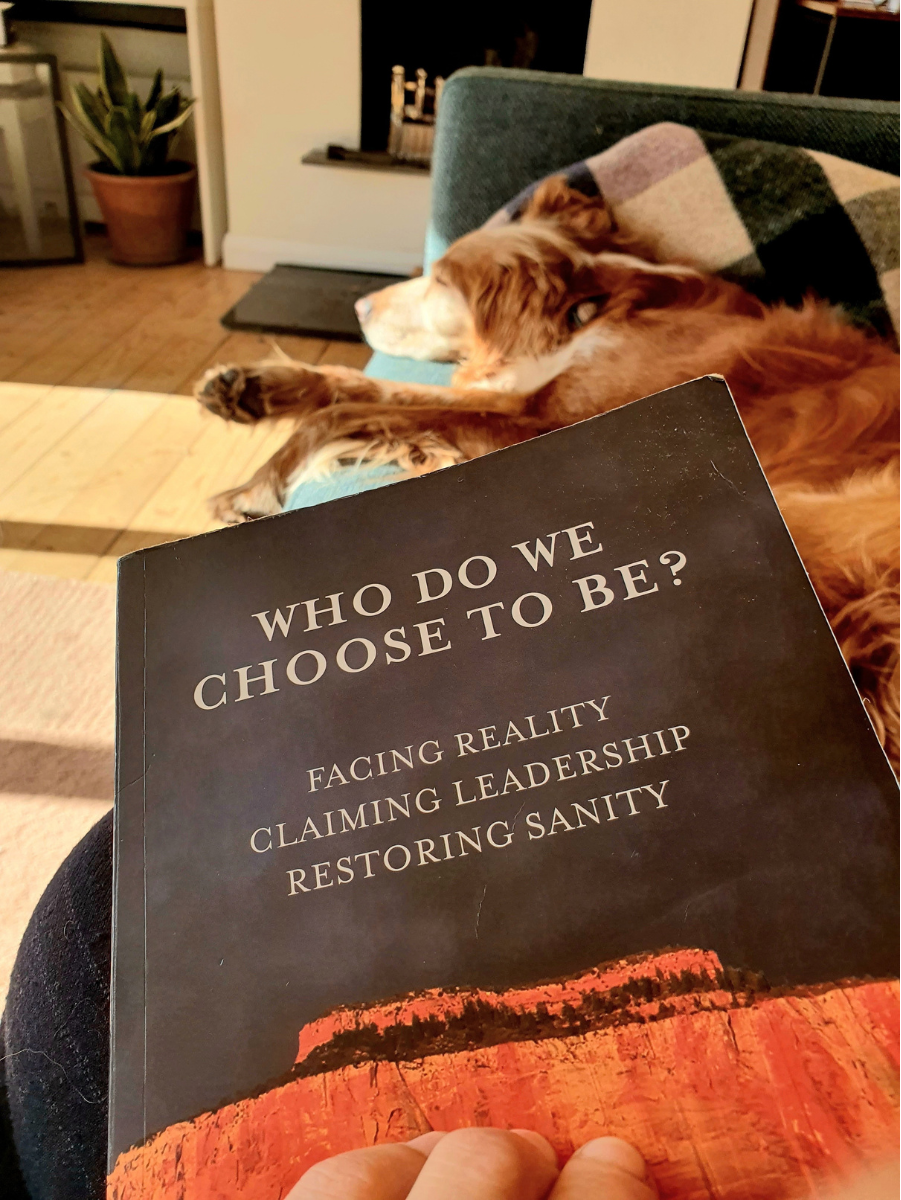
There is a lot being written and said about leadership right now. Theories, frameworks, management books, and what feels like a huge boom in leadership coaches (yup, I am one of them). As I was reading Margaret Wheatley's Who Do We Choose to Be? Facing Reality, Claiming Leadership, Restoring Sanity, it occurred to me why that is. It's kind of obvious once you see it, but I hadn't yet gathered my thoughts around it. And I think it matters that we do.
We're not seeing much wise leadership, steady presence, or honest reckoning with what's happening in the world today. There are of course inspiring figures we can look to who are doing amazing things. But the leadership actually shaping our daily lives — in politics, mainstream media, in workplaces — mostly goes against restoring our society.
It means the source of good leadership must come from somewhere else.
When the Children Have to Grow Up
Parts of our civilisations have already collapsed, some literally flattened by geopolitical assault or climate disasters. (The words feel dry, but my eyes are often not.) Others are slowly unravelling. And what has caved like a brittle bone is trust. Trust that those at the top are looking after anything other than their own re-election or enrichment.
Historically, this is not new of course. Something archetypal happens when the ones in charge fail. When the parents leave the nest, the children have to grow up. Some people desperately try to find another parent figure — often a more autocratic one — only deepening the orphan wound. But many others turn inward, and toward personal agency. The Stoics flourished under corrupt empire. The Renaissance emerged from institutional decay. The self-development and consciousness movements of the 1970s emerged across the West resulting from disillusionment with political leaders. And now, these times.
It gives rise to a maturing of sorts, reflecting on questions like: What truly matters to me? What is the society I believe in? And is it time to get up and help build it myself?
Two Kinds of Leaders Being Called
The way I see it, and I'm simplifying here, two things are unfolding simultaneously.
The first is on an institutional level. If you went into your leadership role because you wanted to make a difference, this moment is probably testing you. You face headwind from stakeholders who don't share your values. You absorb the distress of your team. You burn out, or detach, or both. Many leaders in this position, and you notice this disproportionately among women, are high-empathy people who are struggling precisely because they are so committed to the cause.
And yet you haven't given up on the idea of practising a new kind of leadership. You just need grounding, focus, and a recognition of how you are best built to lead, rather than simply responding to everything that lands on your desk.
The second is on a personal level. There is a growing number of us feeling out of place in the mainstream — something that has always been the case for marginalised communities. You may find it increasingly hard to outsource your agency to those currently at the top of the pyramid, and feel OK about it. This social awakening can be daunting. You start questioning the very things that once anchored you: your job, your community, your assumptions about how a life should look. Sometimes it means leaving what you know. It's the Hero's Journey Campbell wrote about.
Knowing this is a wider pattern can be reassuring, at least it is for me.
It's also where the step often becomes intentionally seeking out communities who also want to build something better. We see it in local community building, local food growing, in global online spaces where people are finding each other around shared values. It makes your individual journey — your personal leadership — part of a kinship journey.
A Healthy Response to Unhealthy Times
Looking at it from the perspective of these two currents, it seems the leadership boom isn't a fad. It's what happens, historically, whenever systems fail.
In her book, Wheatley argues that healthy organisations develop leadership capacity in every member, not just a few charismatic figures behind the mic. It seems what we are witnessing is exactly that, playing out at a societal scale.
Because in the end, the leadership humanity needs right now isn't going to come from outside us. We've always had, and still have, wonderful role models around us — people who lead from compassion, inclusivity, and wisdom. But for our own practical lives, the action and the implementation have to come from us, from inside. And the more of us who learn to access it, the better our chances of shaping something worth passing on.
A Note About Impact Sweet Spot
Wheatley writes about the importance of creating islands of sanity — spaces within your own sphere of influence where people can work with integrity and care, even as larger systems become increasingly chaotic.
You don't try to fix the whole system. You tend to what is yours to tend. That idea sits at the heart of my framework Impact Sweet Spot™, which is really just my own way of bringing these principles into the world.